
ROSH HASHANAH 5785 • L’CHAIM®
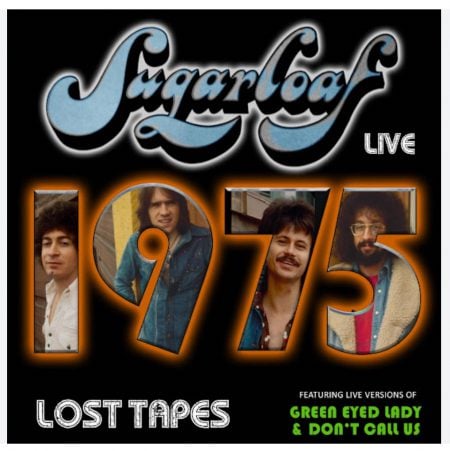
Denver’s Myron Pollock was the drummer for Sugarloaf — from rock’s golden era
When Myron Pollock had his Bar Mitzvah — officiated by the late, great Rabbi Daniel Goldberger of Beth Joseph and HEA — he originally intended to save his Bar Mitzvah money and, following the advice of his father, eventually buy a car with it.
He changed his mind.
“I’d always been interested in the drums, always,” Pollock told the Intermountain Jewish News earlier this month. He’d been learning from a neighbor friend, a drummer, how to beat the skins and had repeatedly requested to join his school band as a drummer. His parents weren’t too thrilled with the idea.
“They didn’t want the noise in the house,” he says with a laugh.
“Well, when I turned 16, dad said, ‘Well, why not? Let’s go get the car.’ And I said, ‘No, I wanna go get a drum set.’ So we went to my cousin’s pawn shop and bought a drum set. And that’s how it all started.”
Pollock didn’t know it at the time, but he had just set out on a path that would lead him to the epicenter of the crazy, inspired, hyper-creative and supercharged musical scene of the era. From the early sixties to the late seventies, he not only had a front row seat, but a spot on the stage, during what many critics and historians describe as the golden age of rock music.
Pollock, who turned 78 years old this month, lives in Highlands Ranch with Gloria, his wife of 57 of those years. A native of South Bend, Ind., he came to Denver with his family at the age of 12. He lived in Northwest Denver and graduated from North High.
His first band gig was with a teenage outfit called the Rivieras — later changed to the Galaxies (both of which names seem to have been inspired by popular automobile models) — who specialized in surf music. This was in the early sixties, before the Beatles came along and changed everything, when bands like the Ventures and Beach Boys (and, one of Pollock’s favorites, the Boulder-based Astronauts) were singing and strumming about surfing, drag racing and California girls.
“What we would do — since none of us were old enough to play in the 3.2 clubs, which were for 18-year-olds at the time, since they had 3.2 beer — was rent a hall, make up flyers and charge admission. And we’d throw our own dances.”
Along the way, Pollock gained a local reputation as a pretty mean drummer. He caught the attention of The Wild Ones, a band that often played at Sam’s on Lookout Mountain, a popular 3.2 hangout, and joined them as a drummer. His work with that band and a short-lived psychedelic outfit called Super Band, led to an invitation from two well-known Denver rockers, vocalist-keyboardist Jerry Corbetta and guitarist Bob Webber, both veterans of the Moonrakers, a seminal Denver garage band.
“After the Moonrakers, Jerry and Bob decided they wanted to start what they would call a super group and pick out some really good musicians. Bob wanted Bob Raymond, who had previously played with the Soul Survivors and the Esquires, and Jerry wanted me. In 1968, we started a band called Chocolate Hair.”
Despite the flower-power sound of its name, Chocolate Hair was not a psychedelic band at all. Pollock describes its sound as “fusion rock,” a blend of rock, jazz and funk. The band starting writing and recording demos almost immediately after forming and drew national interest almost as quickly.
In 1969, impressed by the band’s fresh material, Liberty Records wanted to sign Chocolate Hair and release a debut album, but the company didn’t care for its name.
Pollock, who sported a substantial afro in those days, says with a laugh: “Chocolate Hair was kind of a dumb name. We came up with that because we all had long, brown hair, but the label thought there were too many racial overtones with it. They wanted a name change and wanted it very, very quickly. At the time, Bob Webber, our guitar player, was going to CU in Boulder, and he lived on Sugarloaf Mountain. So they figured Sugarloaf would be a natural name. I remember they asked, ‘You mean, like the mountain in Brazil?’ And we said, ‘No, like the mountain in Colorado.”
It didn’t take long for Sugarloaf to hit the big time. The album, released in 1969, sold well and included a single, “Green-Eyed Lady,” which hit the airwaves the following summer. The song made it to number three on the Billboard chart in August, 1970.
It was the first of five Sugarloaf singles to reach the Billboard Top 100 over the next five years, including 1974’s “Don’t Call Us, We’ll Call You,” which reached number nine.
Ironically, the band’s signature song, “Green-Eyed Lady,” was the only cut on the debut album on which Pollock didn’t play. He left Sugarloaf in the fall of 1969, before the hit was recorded, to explore other musical pursuits.
But Pollock would later have plenty of opportunities to provide the rhythm for “Green-Eyed Lady” and the rest of the Sugarloaf catalogue. After spending some time in California, he returned to Colorado and rejoined Sugarloaf for its third and subsequent albums, going on multiple national tours with the group until, after a number of personnel changes, it disbanded in 1978.
Through all the years that Pollock worked as a professional drummer, before, during and after Sugarloaf, he says he loved his job and expresses both fondness and respect for the other musicians he met along the way, many of whom have become lifelong friends.

Sugarloaf toured with headliner bands like Iron Butterfly, War, Roxy Music, Styx, the Guess Who, Tower of Power and Sha Na Na, and did several television performances, including two on the legendary American Bandstand. Pollock worked alongside music professionals whose resumes include acts like Steely Dan, Three Dog Night and the Electric Prunes.
Performing, rehearsing and recording were Pollock’s sole occupations during those years.
Asked whether it was lucrative, he sighs. “Not so,” noting that most professional musicians of the period were more interested in playing and touring than paying attention to the business side of it.
“It wasn’t until maybe 10 years later that musicians figured out that they had to have some kind of representation and understanding of how the business operated.”
Years later, he says, he contracted with people who are looking into whether Pollock is still owed money for his work with Sugarloaf and other bands. “There’s a lot of royalties out there that I never got and I’m having them search that to see what happened to it.”
And although he loved traveling to the many cities he played in, he says that performing day after day on the road was arduous and, at times, exhausting, especially for drummers, who, at least in physical terms, had the hardest job in the band.
In virtually every Sugarloaf concert, Pollock says, he was expected to do a drum solo, like many rock drummers in those days. The solo, which could last for many minutes, coupled with his work on all the other songs, routinely wore him out.
“After those shows, I’d go into the dressing room and I had to change my clothes, because you could wring them out.”
The constant travel, he adds, could be a blur.
“You play so many places that it all seems to run together, because when the spotlight comes on, you can only see about the first five or 10 rows of people anyway. We used to open up with a song then we would bring the sound down and Jerry would say, ‘Good evening, ladies, gentlemen, we’re Sugarloaf from Denver, Colorado, and we’re really happy to be here in Chicago, or wherever.’ Well, this one night he said, ‘It’s really nice being in . . .’ And he turned around and looked at me and said, ‘Where are we?’ And I said, ‘I don’t know!’ So he quickly said, ‘Here.’”
Such snags notwithstanding, Pollock says he never grew tired of performing the same or similar sets night after night. The band members were proud of the songs they had created and never grew tired of the feedback from the audiences who had grown to love them.
Working with his bandmates, and with the members of other bands, was almost always a joy, he adds.
“The camaraderie with the other guys was really a lot of fun,” he says. “I miss that. We were playing four, five, six nights a week so you see them more than you see your family. And you become friends with the guys you travel with. Most of them were just regular guys, having a lot a fun. It was just a very small percentage of people who were jerks.” (Pollock mentions Roxy Music as a particularly unfriendly bunch.)
One of the things Pollock is grateful for is that unlike the common belief that most rock musicians of the sixties and seventies were avid drug users — and the undeniable fact that many of them were — Sugarloaf was always a drug-free band.
“Our guys were more cerebral than the party type band,” he says. “Drugs weren’t part of our deal. We were all about the music and that’s why it worked so well.”
Pollock pauses and chuckles.
“You know, I’m one of the few guys from the sixties and seventies who can actually remember the sixties and seventies.”
These days, Pollock describes himself as “semi-retired,” explaining that he dabbles a bit in sales.
As for music, “I’m just playing for my household cat in my drum room,” he says.
But he has plenty to keep himself busy.
One of his passions is to work as a volunteer to help rescue dogs and cats from shelters which plan to put them to sleep. He finds permanent homes for the abandoned pets at his own expense. His wife Gloria says, with obvious pride: “He has a natural way with animals. They seem to know that they are safe with him.”
The kids in the neighborhood love him, Gloria says, and like to draw pictures for him, which he sincerely appreciates.
“There’s a reason people say he’s the nicest person they know,” she says. “I’ve never heard him degrade anyone. He is very modest, never says a cuss word. He can find some sunshine on even the darkest of days.”
Pollock misses his days as a musician, but cherishes his memories of those days and the many musician friends he still has. He acknowledges that he’s a bit old school when it comes to musical trends — he listens mostly to contemporary jazz these days — and admits, when asked, that he’s not a Swiftie.
“I can appreciate her talent,” he says of megastar Taylor Swift, “but it’s definitely not my cup of tea. I’m more of a purist. I like to see the musical presentation. Nowadays it’s like a three ring circus. You’ve got to put on some kind of spectacular, Fourth of July type show. You can’t just get up there and play anymore.”
He has absolutely no regrets that he spent several decades of his life just getting up there and playing, dating back all the way to when he decided to spend his Bar Mitzvah money on a drum set instead of a car.
Pollock notes that his first use of those drums was to sit in for a period with a country and western band.
“Within two months,” he says, “I made enough money to go buy the car anyway.”
© IJN 2024