
Denver metro’s population boom and increasingly expensive real estate market has driven growth across the Front Range, Some seek more affordable housing. Others are drawn to smaller, quieter towns. And, in Colorado, one can never underestimate proximity to the outdoors in choosing a community to settle in.
The general trend has been paralleled by a growth in Jewish communal life. Meet some of the faces of Northern Colorado’s robust and growing Jewish community.

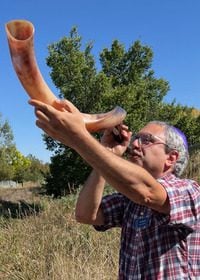
Eli Alberts, Temple Or Hadash, Fort Collins
What brought you to Northern Colorado?
I came for a teaching position in the history department at Colorado State University, where I have worked since 2012. I am a specialist in Chinese and East Asian History.
Which institutions are you involved with?
I am president of Temple Or Hadash, a Reform Jewish congregation in Fort Collins. At CSU, I am also one of the co-chairs of the Advisory Council for Jewish Inclusion.
What is it like in a smaller community?
Very rewarding. Until I was 13, my family belonged to a much larger congregation in New Jersey, B’nai Jeshurun. Since I was so young, it is difficult for me to recall what congregational life was like. Obviously, there were a lot of people I didn’t know, but several Jewish classmates attended the same congregation, so there was a sense of familiarity.
There was also a much larger Jewish population where I grew up. After my Bar Mitzvah, I drifted away not just from New Jersey, but also from organized Jewish life, really until I started attending services at Or Hadash in 2017.
Even though there is a much smaller Jewish community in Northern Colorado, joining Or Hadash was like becoming part of an extended Jewish family, something I was looking for at the time.
I have had the opportunity to get to know and become friends with most of the congregants. This is partly because I am president, but also a fact of being part of a smaller congregation.
How has Fort Collins changed?
It has become more diverse, especially in terms of the cultural life here. There are simply more options in terms of food, entertainment and even religion.
Fort Collins’ population has exploded.
I am part of this population explosion, since I arrived here in the past 10-15 years, so it is difficult for me to offer insight into how Fort Collins has changed, but one thing is certain and that is there are more people here. More cars on the road. Seemingly more students at the university.
But also more people looking for a Jewish experience and a Jewish community to find belonging.
We have seen this especially since the global pandemic and then the tragic events of Oct. 7, 2023.
The surge in involvement has definitely been a positive for us, especially when we see more people at our services. The big challenge, though, is targeting not only those who are looking for a congregation, but also those such as myself before 2017, who were raised Jewish, but are not particularly looking for Jewish community. Yet, there might be an “aha” moment, in which the allure of Judaism beckons.
How do we maintain our visibility in the wider community while also alleviating concerns about security? Of course, another challenge is the rise in anti-Semitism.
Does the Jewish community fall into Fort Collins’ larger community?
We are not a community that is cut off from the wider community. Most of us have lives that transcend any singular identity. We have our Jewish lives, experiences, gatherings, etc., but that is only part of who we are. Many are in interfaith relationships. I can’t think of anyone who does not have friends and co-workers who were raised in other faiths and cultural traditions. Each of us is interacting with diverse communities. I see a mosaic, not exclusivity.
As a congregation, we welcome those who are interested or simply curious to participate. Over the years, I have witnessed a growing interest in conversion to Judaism.
We also contribute to the larger community through our tikkun olam activities, which are not aimed solely at the Jewish community.
What is something special about Fort Collins’ Jewish community?
This is difficult to answer. What is special about the Fort Collins’ Jewish community is also what is special about Fort Collins itself, and Northern Colorado more broadly. It is very beautiful here and the mountains attract a large number of people who cherish the outdoors.
The university attracts so many interesting, educated and talented individuals who have lived fascinating lives.
Many people come here to retire, but others arrive ready to start their careers and their families.
The future?
Promising, despite the challenges.
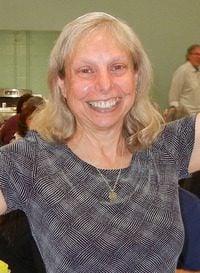
Susan Scruggs, Longmont Shabbat Group
What brought you to Longmont?
My husband, Stephen, and I moved back to Colorado in 1981 after his six years in the US Navy. Stephen and I met in Denver in 1973 when we were both working at the Denver Central YMCA in their after-school program for inner city youth.
When his tour of duty with the Navy ended, Stephen found a great job at the (former) Fort St. Vrain nuclear power plant in Platteville and I started working as a technical writer and editor at IBM Boulder, so Longmont was a good half-way point.
Plus, it was the only town where we could find an apartment that would let us have the cat that we planned to adopt, and that had an active Jewish community.
Which institutions are you involved with?
I am the founder and leader of the Longmont Shabbat Group, and I am a member of Cong. B’nai Torah (CBT) in Westminster.
Leading the Longmont Shabbat Group takes a great deal of my time and energy, so I consider my time at CBT to be my Jewish vacation. I try to help a bit at CBT, but mostly that’s where I can just take a break and enjoy Judaism as a congregant rather than as a leader. I am also a member of the Boulder chevra kadisha (Jewish burial society).
I also worked with the owner of Foothills Gardens of Memory, one of the two Longmont cemeteries, to establish the first Jewish cemetery in Longmont. The Jewish section is called King David Memorial Garden.
It is a completely natural bordered area for Jewish “green” burials, with a natural prairie lawn (not manicured) and the spectacular classic view of Longs Peak and Mt. Meeker.
It was consecrated in October, 2021 by the Longmont Shabbat Group.
What is it like in a smaller community?
We love Longmont and we have a wonderful, vibrant community. Community is very important to me, so when new Jewish folks move to town and find out about our group, it is very satisfying to have them join us.
Our members are very active in welcoming new people when they arrive for services, which is very important. We want everyone to feel welcome. We take turns hosting and leading each service, so everyone gets to know each other very well.
Being a smaller community, our group has had a lot of Jewish “firsts”: We had the first Shabbat services in Longmont, the first Hebrew school, the first Bar and Bat Mitzvahs, the first interfaith build for Habitat for Humanity, the first Jewish men’s poker club, the first Jewish book club.
We participated in establishing the first Jewish cemetery in Longmont.
We had the first community Passover seder in Longmont. Our seder is really the highlight of our calendar. Everyone brings a dish to share, and we have the wonderful aroma of all that delicious homemade food as we tell the story and sing the songs.
How did the Shabbat group start?
When we moved back to Longmont in 1981, we joined the original Longmont Shabbat Group, which met once a month for Havdalah services in various homes in Longmont. That group disbanded when the leader moved out of state.
However, I kept my friendships with several of the members and I kept the printed member list from our last service.
Meantime, Stephen and I bought our house in Old Town Longmont. A Jewish couple lived across the street and a Jewish man lived two houses away. When a Jewish woman moved in right next door, I decided that it was time to restart the group.
That was in 1992, and we’ve been meeting once a month for informal Shabbat services ever since.
We currently have about 100 people. When we started in 1992, we had 17 people.
At first we took turns having our Shabbat services in each other’s homes. After about three months we ran out of room and started renting meeting rooms in various facilities and churches in Longmont.
We are currently in our fourth facility, in a meeting room in a church in central Longmont.
Does the Jewish community fall into Longmont’s larger community?
Until Chabad arrived in Longmont several years ago, our group was the only Jewish community. Our two groups fill very different needs. Our group is informal and very low-profile, while Chabad has its own rabbi and building and does large events that the public in general can attend.
Longmont’s population has exploded.
We are excited to be a growing and vibrant community. We have many artists, musicians and creative people moving here every day. Our Longmont Symphony is top-notch, and our Longmont Museum is just completing a fantastic expansion. In the summer, Longmont has free concerts at various parks and at the museum.
With the growth, we find that housing is tight and it is a challenge for the city to balance growth with the need for new apartments and houses.
What is something special about Longmont’s Jewish community?
Most of the members of our Jewish community know each other and are friends. If they aren’t members of Longmont Shabbat Group or Chabad, they might have met at one of our services or events and remained friends or acquaintances outside of the groups.
When you (or your children) are such a small percentage of the population, you tend to seek each other out of the larger community.
The future?
Very bright. We have members who genuinely care about each other and are here for each other during good times and also during sickness and loss. It is a delight to be with them for Shabbat and for Jewish holidays. We have many members who step up to lead our services and volunteer whenever they are asked.
We have one family who hosts our Chanukah service every year, always going to great lengths to make the service as much fun and interactive as possible. For the past few years, they have arranged for a local storyteller (who is also a member of our group) to tell us Jewish-themed stories after we light all our menorahs.
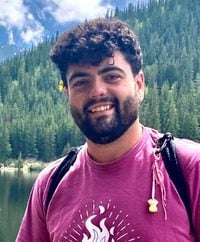 Scott Gerstel, Hillel at CSU
Where are you from?
I was born in Red Bank, NJ and grew up in Boca Raton, Fla.
How did you come to CSU?
A few years ago, I found myself working at a tech company, completely unsatisfied with the impact I was making on the world. After quitting that role to return to my Jewish summer camp and then travel the world, I had a renewed sense of responsibility to my community and a deep want to give back to the institutions that built me up throughout my youth.
My original plan was to make aliyah to work in Taglit Birthright, but after getting stranded in Morocco for a few weeks after Oct. 7, I made my way back to the US and took a part time role at Florida Atlantic University Hillel. There I fell in love with this work.
After a short interview in Fort Collins I was impressed by the students’ hard work, elated to work with my bosses Shira Teed and Daniel Bennett, and ultimately I fell in love with the community I now serve.
Is Jewish campus life a bubble?
CSU Hillel is well connected both within the university system and the larger Jewish community of Fort Collins.
I have a handful of students and recent alumni who teach and participate in Har Shalom’s Hebrew school program, as well as supporting the local BBYO chapter.
I also have students who help run the CSU multi-faith council that hosts bi-weekly Food for Thought programs, designed to facilitate dialogue between members of different faith groups surrounding different topics every week.
Finally, there is a budding group called the Jewish Alliance of Northern Colorado, which I am taking an active role in supporting.
I also serve as a member of the Jewish Advisory Council at CSU.
What challenges did you anticipate coming to CSU?
Coming to a new place with fresh ideas and new perspective can always be challenging. Whether students would appreciate change, be skeptical or embrace it fully was heavy on my mind this summer as I prepared for fall.
The first few weeks was a great learning experience, getting to know our student leaders, campus climate and community partners. Ultimately, what I learned at Florida Atlantic University has served me extremely well, and we’ve seen a huge influx of student engagement and participation.
Shabbat dinners have nearly tripled in size. We’ve seen had more students come through our doors this past semester than the previous two years combined, very much credited to our passionate student leaders who have done an amazing job welcoming Jews and their friends of all backgrounds and religious affiliations.
I’d heard we had about 500 Jewish students at CSU Fort Collins, but based on what I’m seeing the actual number is greater than 1,000! I’m truly inspired by the student leaders here at CSU.
Tell me about Jewish life on campus.
As a Jewish student at CSU, you can expect a home cooked kosher meal at least twice a week — Tuesdays and Fridays.
On Tuesdays we rotate between education, arts, social, wellness and tikkun olam activities ranging from stuffing care packages for the local unhoused population to watching “The Zohan” over homemade milkshakes and cookies baked from scratch.
Every erev Shabbat you can expect 6:15 services led by Josh Geisser, our talented student president, and a delicious home cooked meal with 40-60 of your Jewish and Jewish-adjacent peers.
Based on student needs, we’ve also added shifted focus onto deep, immersive engagement activities, needed for student wellness. We hosted a camping Shabbaton at the beginning of the semester where 25 students and I went out into the wilderness for a weekend of connectiveness, prayer and exploration.
I hope to expand on this further next semester by heading to Denver to connect students with Jewish offerings for post-grad, like synagogues and Moishe House.
Our students range in Jewish identity from modern Orthodox, students regularly wearing kippot and keeping kosher, to those having knowledge of familial Jewish connection but no personal connection.
Creating a community that accepts all and meets students where they are at has been pivotal in their lives. Creating the biggest Jewish tent possible is one reason we are in achieving our record-breaking student engagement numbers this year.
We’ve even seen a huge influx of non-Jewish participation in everything from Shabbat dinners to our “Brunch and Learn” educational cohort on Zionism that runs on Sundays.
It has never been more important to engage our non-Jewish peers and I’m so proud of our community for doing the hard work and creating allies within the larger CSU community.
What is something special about the Rams’ Jewish community?
Most Hillels cater their meals from local establishments. Rarely will you find a kitchen filled with student volunteers and our head chef (an undergraduate Jewish student at CSU) pumping out meals at the scale we are here at CSU.
Diana Kloek, our talented and passionate chef, spends countless hours planning, shopping and cooking for our Tuesday evening and Friday erev Shabbat meals.
We maintain two kitchens — meat and dairy — and always provide vegan options for students with dietary preferences. Every meal seems to be more delicious than the next!
The future?
Extremely bright. As our systems become more streamlined, our leadership pipeline grows and our capacity for outreach expands, I have no doubt that this productive semester is just the start for what this community is capable of.
I’m so honored to be serving the community here and cannot wait to see what the facilities, staffing and outreach looks like in years to come.
Since Oct. 7, 2023, it’s become clear to CSU Hillel’s parent organization, Hillel of Colorado, and to me, that universities with smaller Jewish enrollments need Hillel more than ever to train students to stand up to anti-Semitism, to tell truth to power and assure university administrators do their jobs to protect Jewish students.
That will take additional resources, but it’s something we all feel compelled to do sooner rather than later.
Since there is strong interest in Jewish life at nearby University of Northern Colorado in Greeley, Front Range Community College in Fort Collins, and the University of Wyoming in Laramie, I hope to gain the capacity to be able to serve these campuses.
I’m working toward that goal by building a parent advisory group and pulling together Northern Colorado Jewish leaders and influencers, and by working with my supervisors and our Hillel of Colorado board to address increasing our Merage Hillel House’s program space. We are (a great problem to have!) now bursting at the seams.

Michelle Gliszinski, Har Shalom, Fort Collins
What brought you to Northern Colorado?
After visiting Fort Collins while living in Nashville, my now husband and I decided that we were ready for a change of scenery. We fell in love with how walkable and bikeable Old Town Fort Collins is and felt that it was a good place to raise a family. We were right!
Which institutions are you involved with?
I am the president of Har Shalom Center for Jewish Living and have served on our board for the past four years.
You can also find me teaching our 7th graders at the religious school every Sunday.
I am involved with a group of Jewish parents who meet with our school district every other month to talk about issues surrounding anti-Semitism.
Myself along with the president of Or Hadash (Eli Alberts, see above) are at the beginning stages of starting an alliance that will link up all of the Jewish organizations along the Front Range. We are excited to work with our Jewish brothers and sisters that live along the I-25 corridor starting from Greeley and extending into Cheyenne and Laramie, Wyoming.
What is it like in a smaller community?
For a smallish town with an even smaller Jewish community, I think living here Jewishly is amazing.
Our founders recognized at the start that our synagogue would need to be unaffiliated so that we could serve the needs of all the Jews who live here. Because we are a smallish congregation, our members are able to be more hands-on with the direction of our synagogue.
We have members leading all kinds of different groups — Rosh Chodesh, a men’s club, book club, tikkun olam, Keshet Pride, etc.
If you have an idea and are willing to put in a little work, our office and leadership staff do everything possible to support our congregants in the multitude of ways that they connect with their Judaism.
How has Fort Collins changed since you’ve been there?
It’s grown! Our Jewish community has grown. Specifically, we saw a lot of new members move here during COVID. Over the past six years, our religious school has doubled in size.
We have loved expanding our community; the drawback is that we are quickly running out of space. I have 15 7th graders in my religious school classroom and we are packed in like sardines!
We will never turn away a Jewish student who wants to learn so we are always coming up with creative ways to use our aging and limited building. If you happen to know anyone who would like to help a small but mighty Jewish community with our building expansion, please put them in contact with me.
Does the Jewish community fit into the larger community?
It’s not uncommon for there to be only a handful of Jewish students in each of our district’s elementary schools. I grew up in a large Jewish community in south Florida, so it still surprises me to find that many Fort Collins natives have had little direct contact with a Jewish person.
Since Oct. 7, the Jews in Fort Collins have become more organized and cohesive.
We successfully fought off a misguided ceasefire resolution and made connections with our mayor and city council members. We continue to work with our school district to make sure that our Jewish children are safe at school.
What is something special about your Jewish community?
For a small Jewish community, we have a thriving religious school that our children love attending. Unlike many Hebrew schools where older students drop out as soon as they become a Bar-Bat Mitzvah, our teenagers choose to return and volunteer in our classrooms as madrichim.
This year we have so many that wanted to come back and volunteer that we have them working in shifts to accommodate all of them!
As a parent, I am so grateful that the Jewish children of Fort Collins have a safe, fun and educational place where they can connect to their Judaism. We have our amazing religious school director, Nicki Shamis, to thank for our thriving school.
The future?
Our future is bright! Har Shalom will be celebrating its 50th anniversary soon, and we look forward to having monthly events that celebrate our past and help plan for our future. I’m excited for what the next 50 years have to bring!
IJN © 2025